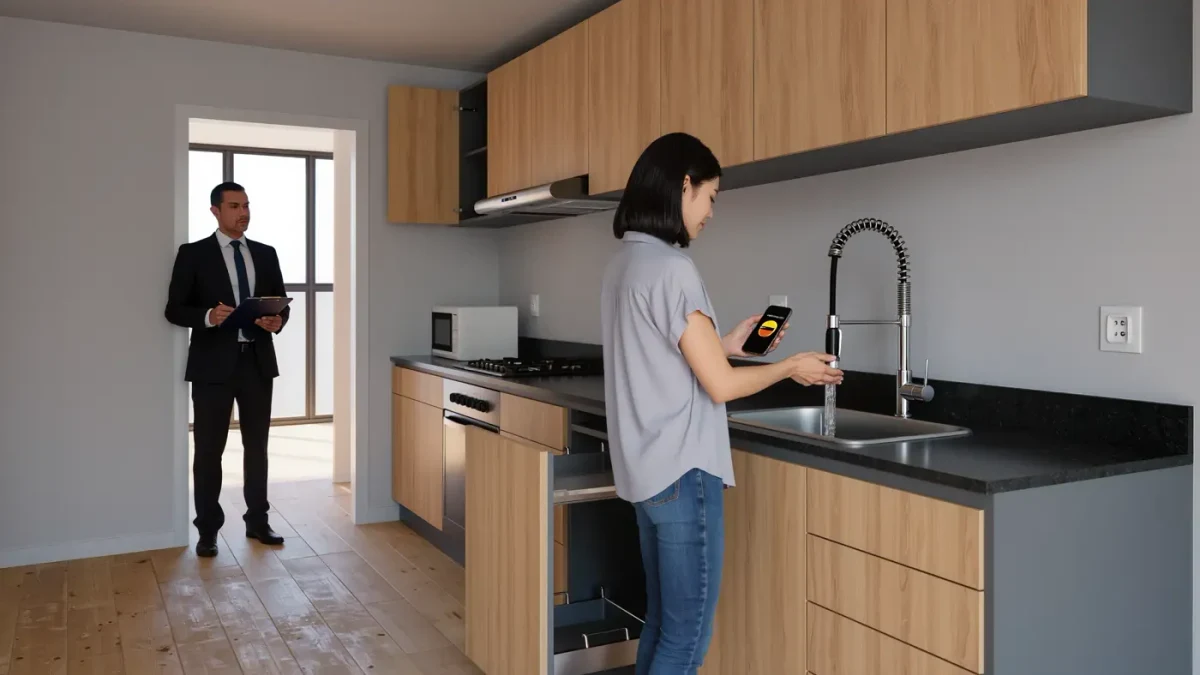
A first apartment tour should test the apartment, not admire it: thirty minutes of deliberate checks — running taps, flushing, listening, measuring, photographing — tells you more than any listing gallery, and doing them in order keeps the cute kitchen from deciding your year. Renter surveys and tenant-advocacy guidance through the 2020s consistently identify the same post-move-in regrets: noise, cell signal and internet dead zones, water pressure, storage, and surprise lease terms — all discoverable on tour day.
Here is the checklist, in tour order.
Before you go: the block recon
Visit the neighborhood at two additional times — a weekday evening and the hour you'd actually come home — before signing anything. Check transit at rush hour and the walk to the grocery at night. On the day, note the block's texture: bars, late kitchens, delivery corridors, school routes, construction fences (a permitted project across the street means a year of noise you can verify at the city's permit portal in five minutes).
The first five minutes: water, drains, and the sound test
- Run every tap hot: pressure, how long hot takes (a long lag at peak hours means shared-boiler scheduling), and the drain speed — a slow drain is a maintenance preview.
- Flush the toilet and listen: refilling pipes that roar through walls preview your nights.
- Shower pressure check: ask, then run it — many cities publish nothing about pressure, but your shower will tell you in ten seconds.
- Silence audit: close windows, stand in the bedroom, and listen for 60 seconds — HVAC, elevator, traffic, neighbors' televisions. Then open a window and repeat. Ask what's above and beside you: a neighbor's hardwood floor above a bedroom is an alarm clock you can't set.
The middle fifteen: light, signal, storage, and the unit's mechanics
- Phone signal in every room — the bedroom corner that drops calls is real and permanent.
- Window orientation and light: which way does the living room face (south and west = bright and hot, north = even and dim), and what could be built in the empty lot across (the city zoning map is public).
- Outlets, counted: count outlets per room against your furniture plan; older buildings hide two-outlet rooms behind staging lamps.
- Closet and storage inventory: measure, don't eyeball — closet linear feet, kitchen cabinet fronts, and whether the coat/bike/stroller situation has any answer at all.
- Appliance ages and condition: look at manufacture labels, ask about the HVAC system's service date, and photograph the meter situation.
- Signs of moisture: under sinks, window sills, ceiling corners at plumbing walls — staining and smell preview the maintenance relationship.
Related stories: Closing costs, decoded for the first-time buyer · What to expect from a home inspection (and what it can't catch).
The last ten: the building and the paperwork
Tour the building, not just the unit: trash area (cleanliness = management quality), laundry (count machines per units), entry security, package room, and elevator condition. Then ask for the lease and the fee schedule before applying — the questions that matter: total monthly cost including fees (amenity, parking, pet, trash-valet fees added billions to Americans' rent bills in recent years, per rental-industry reporting); utility responsibility and average costs; the guest and sublet policies; the renewal-increase practice; and the maintenance request system's actual response times (ask two current tenants in the hallway — the single most honest data source in the industry).
Red flags that end tours early
- The unit is shown with the water off, or "the manager will fix that" without a written pre-lease commitment.
- No lease or fee schedule available for review before the application fee.
- Refusal to name average utility costs — often masking an expensive heating setup.
- Staging that hides rather than displays: one lamp per dark room, curtains permanently closed, rugs over floor damage — lift the rug.
- A "today-only" rent discount — pressure is a term of its own.
FAQ
What should I look for when viewing an apartment?
Test function, not finishes: water pressure and drain speed, hot-water lag, toilet noise, bedroom silence with windows open and closed, phone signal per room, outlet counts, storage measured, moisture stains under sinks, and the building's trash and laundry condition — then read the full fee schedule before applying.
How do I check an apartment for noise?
Stand in the bedroom for a full minute with windows closed and again open, listen for HVAC and plumbing roar after flushing, ask what's directly above and beside, and visit the block on a weekday evening. A permitted construction project across the street is checkable in the city's permit portal.
What questions should I ask the landlord before renting?
Total monthly cost with all fees, utility responsibility and averages, appliance and HVAC ages, the maintenance request system and response times, guest and sublet rules, renewal-increase practice, and why the previous tenant left — plus the lease itself for review before any application fee.
For more context, read How to read a floor plan before you fall for the apartment.
For more context, read downsizing tips.
For more context, read What it takes to turn an office tower into apartments.