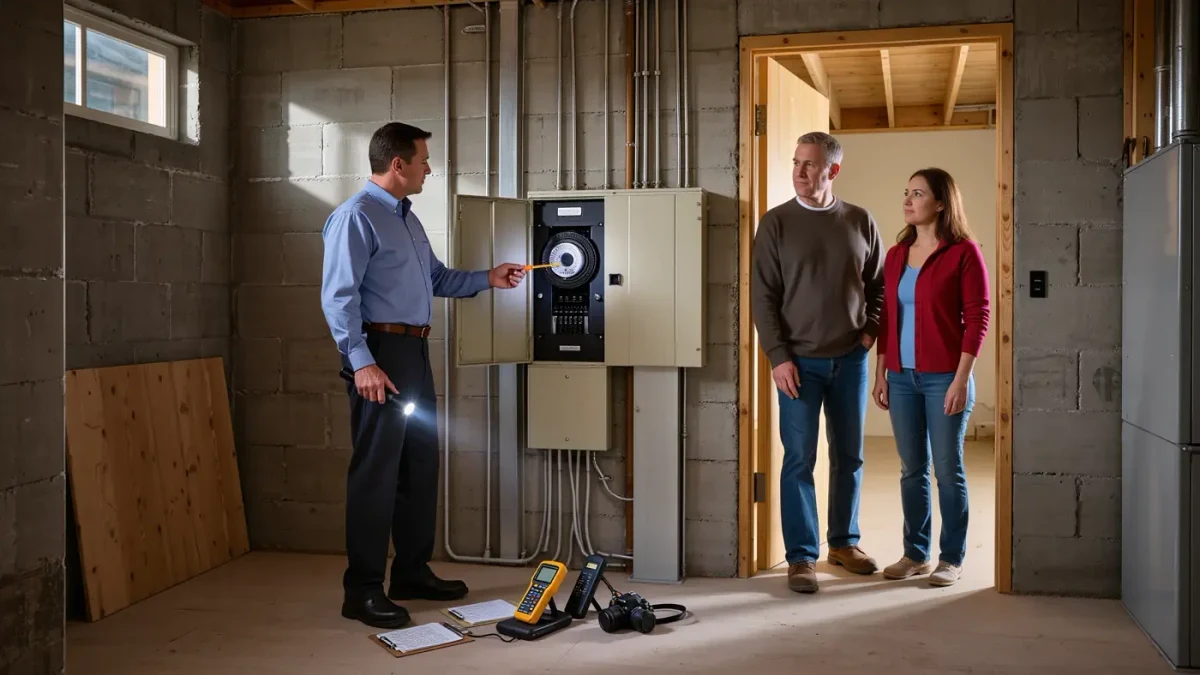
A standard home inspection is a two-to-four-hour visual, non-invasive examination of a house's accessible systems — roof, exterior, structure, plumbing, electrical, HVAC, interior, and appliances — ending in a written report with photographs, typically costing $300 to $600 for a single-family home depending on region and size, per pricing data aggregated across inspector associations through 2025. It is the buyer's best single look behind the listing's paint job, and it cannot see inside walls, under slabs, or through furniture — which is exactly why the follow-up specialists matter.
Here is how the day goes, what the report means, and how to use it without killing your own deal. (This article publishes information, not legal advice.)
What actually happens during the inspection?
You should be there. The inspector walks the exterior first — grading, siding, roof (from the roof or with a drone, per access and safety), then moves inside: attic, basement or crawlspace, electrical panel, plumbing visible points, heating and cooling equipment, windows, doors, and the kitchen's fixtures. Expect the process to feel like eavesdropping on a doctor's checkup for a house: each system gets poked, run, and photographed. Good narrate-aloud inspectors are worth paying extra for; the education is a third of what you bought. At the end you get the report — usually same-day or within 48 hours — organized by system, with severity language ranging from "monitor" to "immediate safety hazard."
What can't a general inspector catch?
- Inside walls: no thermal or visual X-ray — concealed wiring, pipes, and framing defects stay hidden unless symptoms show.
- Sewer lines: a main-line camera scope is a separate service; in older neighborhoods with mature trees it is the single best $150–$300 a buyer can add.
- Chimney interiors, wells, septic systems, pools, and radon: licensed specialists, usually separate visits.
- Termites and wood-borers: a pest (WDO) inspection, standard in much of the South and West.
- Roofs the inspector won't walk and attics packed to the rafters with the seller's boxes.
Which specialist inspections does this house need?
Match them to the house's age and region: sewer scope and electrical-panel review on pre-1980 homes; radon test in known radon zones (the EPA's zone map is public); septic and well for rural properties; a structural engineer's letter if the general report flags movement, big cracks, or framing modifications; chimney scope if the fireplace is real rather than decorative. This add-on menu is where cautious buyers accidentally become reasonable buyers — every extra pair of eyes costs a few hundred and can save five.
Related stories: Closing costs, decoded for the first-time buyer · How to set a renovation budget that survives construction.
How do I read the report without panicking?
Every inspection report on every house over ten years old contains a long list, because the inspector's job is to write everything down. Triage into three buckets:
- Safety and structure — wiring hazards, gas leaks, active leaks, structural movement. These drive negotiations or walk-aways.
- Expensive-soon — a furnace at end of life, a roof at 20 of 25 years. Negotiate price or credits, not drama.
- Maintenance list — caulking, grading, a slow faucet. This is your first-year to-do list, not a concession demand.
The classic buyer mistake is treating bucket three as bucket one; the classic seller mistake is treating bucket one as bucket three.
How does the inspection feed into negotiation?
Depending on your contract's contingency language, findings support repair requests, price credits, or — on structural surprises — a clean exit with earnest money returned. Ask-for discipline works better than a wish list: the strongest requests are safety items, code-required fixes, and the two or three expensive-soon items with photo evidence and a contractor's number attached. Credits beat repairs for speed and let you control the workmanship; sellers often prefer them too.
What about new construction?
Yes, inspect it. Municipality code inspections check life safety, not craftsmanship; a private inspector walking a new build routinely finds missing insulation, loose flashing, miswired outlets, and drainage errors that the builder fixes cheaply before closing and expensively after. Schedule one just before the pre-closing walkthrough, and a separate shorter check at the eleven-month mark, while the builder's warranty is still fresh.
FAQ
How much does a home inspection cost?
Roughly $300 to $600 for a single-family home, scaling up with size, age, and add-ons like sewer scopes ($150–$300), radon tests, or termite inspections. It is paid at the time of service by the buyer, regardless of whether the sale closes.
Can I waive inspection to win a bidding war?
You can, but you are buying the house as-is with no leverage on hidden defects. A middle path in competitive markets is a pre-offer walkthrough inspection or an information-only contingency — weaker protection, but not zero.
Do inspectors have to be licensed?
In most states, yes — licensing, exam, and continuing-education requirements vary by state. Verify at your state's licensing board and check the inspector's sample reports before hiring; the writing quality is the product.
For more context, read What it takes to turn an office tower into apartments.
For more context, read buying a historic home.
For more context, read Closing costs, decoded for the first-time buyer.