A Passive House (Passivhaus) is a building certified to the world's strictest energy-comfort standard: a hyper-insulated, airtight envelope with heat-recovery ventilation that holds the interior within a narrow comfort band using a fraction of the energy a code-built house needs — the standard's headline targets are a heating demand under about 15 kWh per square meter annually, or a peak heating load so low the house barely needs a furnace, plus an airtightness limit (0.6 air changes per hour at test pressure) roughly ten times tighter than ordinary construction. The certifying body, the Passivhaus Institut in Darmstadt, Germany, has seen certified projects multiply across the U.S. through the 2020s — from single homes to large affordable-housing developments in Pennsylvania, New York, and Massachusetts.
What that means in plain terms: the people, the dog, the stove, and the sun heat the house. (This article publishes information, not financial advice.)
What physically makes a Passive House?
- The envelope: thick continuous insulation (walls commonly R-40+, roofs R-60+) with no thermal bridging — every stud, edge, and window frame detailed so heat has no highway out.
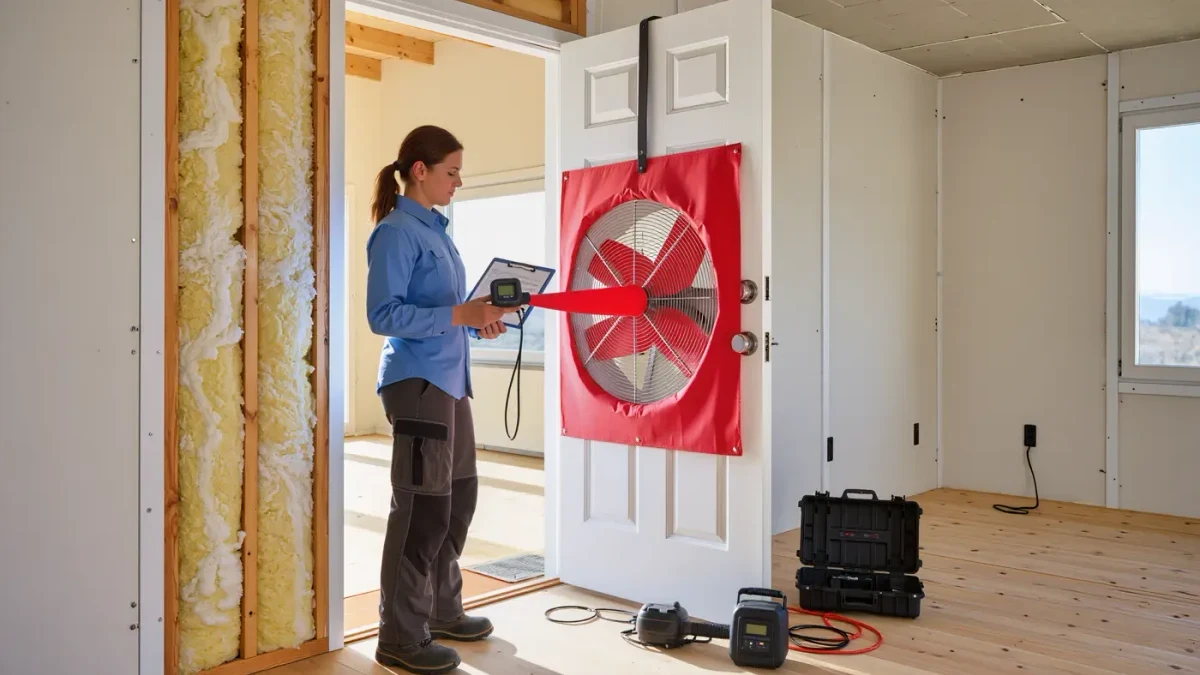
- Airtightness: a continuous air barrier tested by blower door; the seams are taped, sealed, and inspected like surgery.
- High-performance windows: triple-glazed, typically, with insulated frames — the difference between a sweater and a windbreaker.
- Heat-recovery ventilation (HRV/ERV): the signature machine — continuously exchanges stale indoor air for fresh outdoor air while recovering most of the heat (commonly 75–90 percent), solving the "airtight houses are stuffy" objection by design.
- Orientation and shading: windows placed for winter sun, shading tuned to reject summer sun — passive physics before mechanical systems.
What does it feel like to live in?
Consistent — the word residents reach for first. No cold zones by windows, no furnace roar, no drafts: the temperature varies a degree or two across the whole house, all winter. Air quality is the surprise dividend: continuous filtered fresh air means cooking smells, humidity, and CO₂ leave mechanically — many residents report better sleep and fewer allergy symptoms, and the ventilation is quiet enough to forget. The trade-offs are behavioral: opening windows wastes the physics (the ventilation makes it unnecessary), utility bills can include a small fan load, and the house's systems want a resident who changes filters — a passive house is low-maintenance, not no-maintenance.
Related stories: Why single-story houses cost more per square foot (and when they're worth it) · What a party wall means when you buy a row house.
What does it cost, and what does it return?
Construction cost premiums have fallen as the method mainstreams — from early 10–15 percent toward the low single digits, and sometimes near parity in multifamily, where the smaller mechanical systems offset envelope costs. The returns come monthly (heating and cooling bills commonly 60 to 90 percent below code-built peers), in resilience (an unheated passive house in a winter power outage cools a few degrees a day, not an hour — a safety feature disguised as efficiency), and in sound (triple glazing plus airtightness make quiet interiors). Payback math is honest only with occupancy factored: a house kept at temperature year-round recovers the premium fastest; a vacation home does not.
How does certification actually work?
Through third-party verification: a certified designer or consultant models the building with the Passive House Planning Package (PHPP) energy model; construction is documented, photos and materials logged; and the finished building passes the blower-door airtightness test and ventilation commissioning before the institute's seal issues. The buyer's practical implication: certification is evidence, not a marketing word — ask for the certificate, the airtightness test result, and the ventilation commissioning record, which together are the home's energy pedigree.
What should a buyer ask?
- Certified or "passive-style"? The label is earned; the adjectives are free.
- The blower-door number — the certificate's airtightness result, retestable at any future inspection.
- HRV maintenance records — filter changes are the owner's one recurring duty.
- Summer performance: shading and ventilation strategy in the local climate, the standard's own hardest test in hot regions.
FAQ
What is a Passive House?
A building certified to the Passivhaus standard: super-insulated, airtight (0.6 air changes per hour), triple-glazed, with heat-recovery ventilation — designed so internal and solar gains cover nearly all heating needs. Certification is third-party verified through energy modeling, construction documentation, and testing.
Are airtight houses healthy to live in?
Yes, when mechanical ventilation is part of the design — as it is in the standard. The heat-recovery ventilator continuously supplies filtered fresh air while exhausting stale air, giving better and more consistent indoor air quality than a leaky house provides by accident.
Is Passive House worth the extra cost?
Premiums have narrowed to the low single digits in many projects, and the returns arrive monthly — heating and cooling bills commonly 60 to 90 percent below code-built peers — plus blackout resilience and quiet. The math is kindest to full-time occupants: a house held at temperature year-round recovers the premium fastest, while a vacation home recovers it slowly.
For more context, read New construction or resale: a checklist instead of a vibe.
For more context, read duplex house hacking.
For more context, read What a party wall means when you buy a row house.