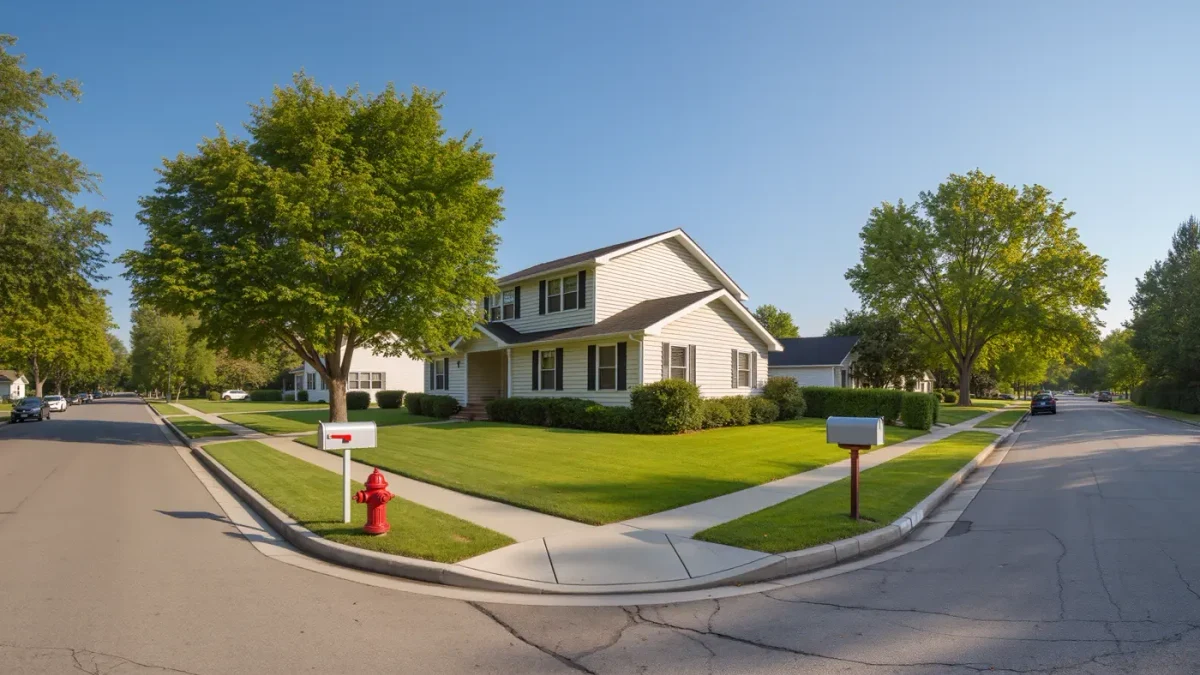
A corner lot — a parcel fronting two streets — typically offers more yard, more light, more curb presence, and, on many blocks, a wider building envelope than interior lots of the same size. It also takes two streets' worth of traffic, noise, snow, signage, and strangers. Appraisers generally find corner single-family lots carry a modest premium in some markets and a discount in others; local custom decides. The honest framing: a corner lot is a bigger stage with less backstage.
Whether that trade is a win depends on the buyer's daily life more than the listing photos suggest.
What are the genuine advantages?
Light and air come first: with streets on two sides and usually shallower neighboring setbacks, corner houses catch sun from more angles and read brighter inside. Side yards become usable — a real garden, a driveway that does not dominate the front, room for the trash cans away from the kitchen window. Access is second: a second frontage means driveway options, corner-garage plans, and, in rural-suburban settings, easier RV or boat parking within code. Presence is third: the house anchors the block's turn, which is why builders historically placed their model homes on corners — free advertising.
And the costs nobody photographs?
- Traffic twice. Both streets' headlights, delivery vans, and school-run cut-throughs pass the house.
- Sidewalk duty. In snow-belt cities, owners clear two sidewalks, and corner properties catch municipal fines first.
- Exposure of the side facade. The side wall — often the utility side — is on public display; renovations must finish two faces, not one.
- Blind corners. Cars turning near a corner yard pose a real risk for pets and kids; fencing and planting must keep sightlines clear per local code.
- More pavement-adjacent land. The strip along the curb — the parkway or verge — is usually public right-of-way you maintain but do not own.
Do corner lots appraise higher?
There is no national rule — this is a local-value question. In premium walkable neighborhoods, corners with mature landscaping can command premiums in the low single digits to ~10 percent in appraisal comparisons; near arterials or cut-through routes, they can underperform interior lots. Comparable sales on the same block settle it, which is why the question to your agent is never "are corners better?" but "what did the three corner sales within a half mile do against interiors?"
Related stories: Why single-story houses cost more per square foot (and when they're worth it) · What a party wall means when you buy a row house.
What should a buyer check on a corner tour?
- Visit at rush hour. The corner's true traffic personality shows on a Tuesday evening, not a Sunday open house.
- Read the zoning on both frontages. Some corner lots carry commercial or mixed-use permissions on the side street — the reason a house might one day sit beside a three-story apartment building. The municipal zoning map is public.
- Check drainage. Curbs from two streets mean two gutter flows meeting at your parcel; look for grading swales, sump-pump activity, and staining at the side-yard low point.
- Measure the buildable area. Corner setbacks differ from interior lots; the extra frontage is not always usable for an addition.
- Look up utility easements. Corners often host transformers and hydrants — permanent metal furniture in your landscaping.
Who should say yes, and who should pass?
Say yes if you want light, garden space, and presence, and your street is a true neighborhood street — low volume, sidewalks used by dog walkers not commuters. Gardeners and privacy-shrubbers can turn the exposure into an asset: a layered corner planting becomes the block's landmark. Pass if the corner is an arterial junction, if the household includes kids who will use the front yard as a playscape, or if snow-shoveling two long runs would be a genuine burden — that chore is annual and unforgiving.
Does corner status matter at resale?
It self-selects: the buyer pool splits into corner-lovers and corner-skeptics, and your marketing should name the type honestly. The corner with a great garden and quiet side street sells itself; the corner on a commuter cut with a chain-link fence sells on price. Whatever you plant or build, keep both facades finished — the next buyer's first walk-around will include both streets, whether the listing mentions them or not.
FAQ
Are corner lots worth more?
Locally variable: they can carry a modest premium on quiet walkable blocks and a discount near arterials. Ask for corner-versus-interior comparable sales within a half mile before assuming either direction.
Who owns the strip by the sidewalk?
Usually the municipality holds a public right-of-way — the parkway or planting strip — while the owner maintains it. Fence or plant nothing there without checking local code; utilities and sight-line rules control.
Do corner lots have bigger yards?
Often yes, since setbacks wrap two sides and neighboring houses sit farther away on the diagonal — but zoning may reserve the extra width for setbacks and easements. Verify the buildable envelope before counting the square footage as usable.
For more context, read What Passive House certification means for a homebuyer.
For more context, read new construction vs resale.
For more context, read Duplex living: what it really costs, earns, and asks of you.