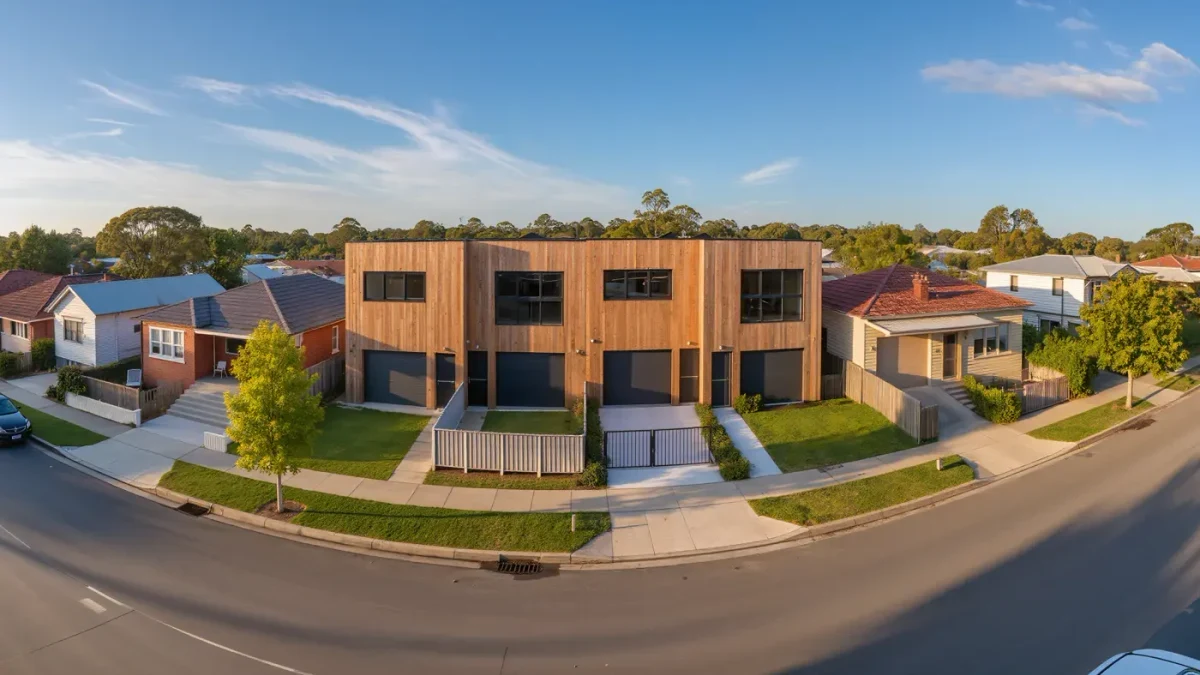
Since 2019, hundreds of U.S. cities and two of the largest states have dismantled pieces of single-family-only zoning — Minneapolis ended it citywide in 2019, Portland followed with its Residential Infill Project in 2020, California's SB 9 (2021) let most single-family lots carry two units or a duplex, and by the mid-2020s the American Planning Association tracked hundreds of municipalities with similar missing-middle reforms, plus Montana's 2023 statewide law. The quiet result: on many residential streets, the legally possible future of a lot is no longer one house — it is two, three, or four homes.
For homeowners, rezoning is an option written into the deed. (This article publishes information, not legal or financial advice.)
What was single-family zoning, and why change it?
From the 1920s onward, most American cities zoned the majority of their residential land for detached houses only — a legal apparatus for separation that, in most cities, mapped closely onto discriminatory mid-century practice. The functional modern case against it is arithmetic: where jobs concentrate, exclusive single-family zoning caps how many people can live near them, which shows up as scarcity, prices, and commute distance. Reformers' argument — made in city councils from Houston to Cambridge — is that allowing duplexes, triplexes, cottage courts, and accessory units on existing residential streets adds supply gently, in already-built neighborhoods, without changing street character much: the new buildings are house-scale.
What can you actually do on a rezoned lot?
Depends on the ordinance, but the toolbox is consistent:
- Lot splits and duplexes (California SB 9): one lot becomes two, or one house becomes two units — with owner-occupancy and size caps in the fine print.
- Triplex/fourplex allowances (Minneapolis, Portland, Alexandria-style reforms): up to three or four units on a standard lot by right, with design standards.
- ADUs (accessory dwelling units) — the quiet vanguard: California's ADU statutes since 2017 made backyard cottages and garage conversions nearly un-refusable statewide, and ADU permits multiplied into the hundreds of thousands there annually by the mid-2020s, per state housing-department reporting.
- Cottage courts and lot-size minimum eliminations in Oregon under HB 2001 (2019–2022 phase-in).
Related stories: The lock-in effect: why half of America's owners won't sell · Why downtown apartments are getting cheaper.
What does it mean if you own one of these lots?
Three practical effects. Value optionality: the land's highest legal use just rose — a lot that can host three homes prices above a lot that can host one, all else equal; appraisers increasingly account for the added entitlement. Renovation and rebuild paths: a family can add a unit for a parent or rental income without moving; an estate sale markets the lot to small builders. Neighborhood change, modulated: uptake is gradual — Portland's early infill years produced hundreds of new units, not thousands — but compounding: the street's future density arrives one lot at a time.
What are the catches?
Plenty, and they are local. Overlay districts, historic designations, and design review can blunt what the base zoning allows; utility and septic capacity constrains splits in unsewered areas; owner-occupancy requirements (SB 9's, for instance) limit investor lot-splitting; and construction economics decide reality — a triplex must pencil against the neighborhood's rents. Homeowner associations cannot override city zoning, but deed covenants predating reform sometimes still restrict use — enforceability varies by state and is a real-estate-attorney question, not a Google one.
What should a buyer check now?
- The zoning map and the ordinance text — city planning counters and online portals answer what the lot permits: units, height, setbacks, parking.
- Utilities at the lot line — sewer capacity is the hidden gatekeeper of lot splits.
- Covenants, conditions, and restrictions in the title work — a private restriction can out-live the reform that made the lot valuable.
- Adjacency: what the lots around yours permit matters nearly as much as your own — your quiet street's future is the block's zoning, not the parcel's.
FAQ
What is single-family zoning?
Land-use rules permitting only one detached house per lot. Adopted widely from the 1920s, it covered the majority of residential land in most U.S. cities until reforms beginning in 2019 allowed duplexes, triplexes, and ADUs on many such lots.
Can I build two houses on one lot now?
In jurisdictions following California SB 9-style rules or Portland-style infill reforms, often yes — two units, or a lot split into two, subject to owner-occupancy, size caps, parking, and utility requirements. Check the local ordinance text before planning.
Does rezoning raise my property value?
Generally it adds option value — land that can legally hold more homes prices above single-house-only equivalents. The size of the effect varies with local rents, construction costs, and whether overlays or covenants limit what the zoning actually permits.
For more context, read Why downtown apartments are getting cheaper.
For more context, read office to residential conversion.
For more context, read How a 1970s tax credit is turning old offices into homes.