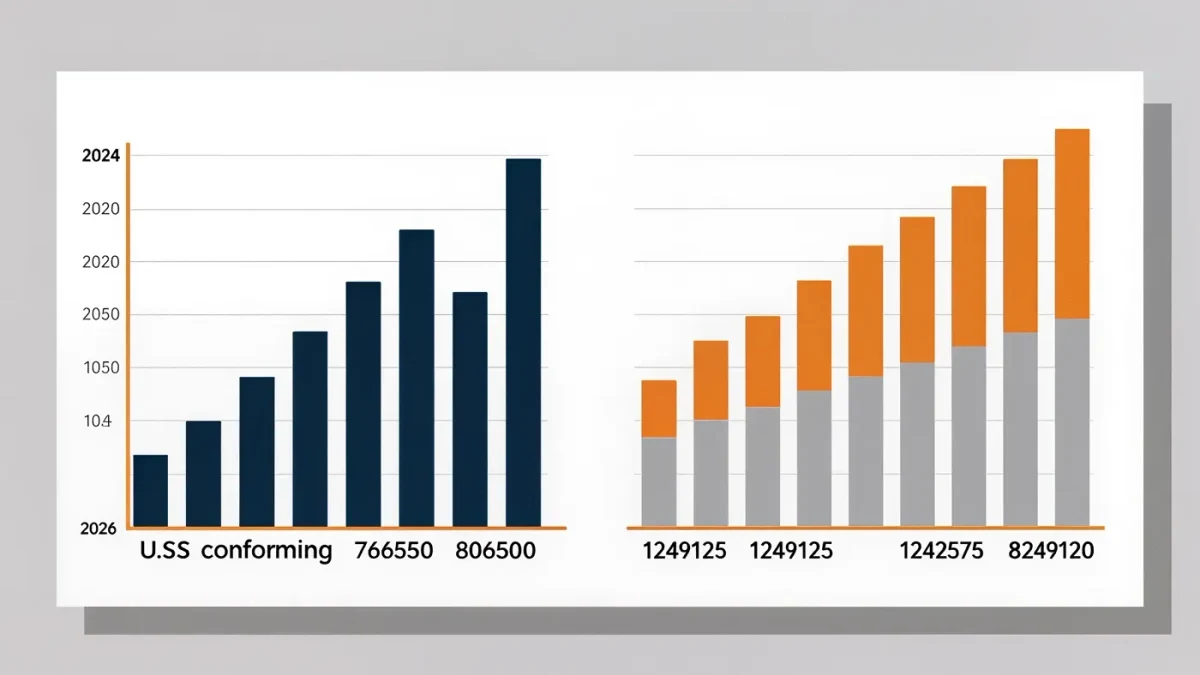
The Federal Housing Finance Agency raised the 2026 baseline conforming loan limit to $832,750 for a one-unit property, up about 3.26 percent from 2025's $806,500, effective for mortgages originated on or after January 1, 2026, per the FHFA's November 2025 announcement. In high-cost areas, the ceiling rises in step to $1,249,125. What that means in practice: a larger slice of buyers in pricey markets can now land a conventional loan — with its cheaper pricing and lower down-payment options — instead of a jumbo mortgage.
For house shoppers, this is the rare piece of mortgage plumbing that changes real monthly numbers. (This article publishes information, not financial advice.)
What is a conforming loan limit?
Fannie Mae and Freddie Mac, the two government-sponsored enterprises supervised by FHFA, may only buy mortgages below a size cap — the conforming limit. Loans under it get the GSEs' guarantee plumbing: better interest pricing, down payments as low as 3 percent on some programs, and standardized underwriting. Loans above it are jumbo loans, priced by private lenders with typically stricter credit and reserve requirements. Every autumn FHFA resets the cap using its house price index; 2026's increase of roughly $26,000 on the baseline follows the index's continued, if slowing, appreciation.
Who feels the change most?
Buyers in the band between the old and new limits. A shopper in a mid-priced metro was never near the cap and notices nothing. But in high-cost metros — the Bay Area, New York, Los Angeles, Seattle, Boston, where the limit is the $1.25 million ceiling — a buyer at, say, $1.24 million previously needed jumbo financing and now conforms. Per the FHFA's own methodology page, the high-cost ceiling is set at 150 percent of the baseline, and 78 counties or so ride that ceiling in 2026.
The limit also moves thresholds that piggyback on it: FHA's floor and ceiling, some portfolio-lender definitions, and cash-out refinancing eligibility all index to the conforming number.
Related stories: Fannie Mae earned $14.4 billion last year, and your mortgage quietly depends on it · Home sales bounced back in February as listings kept piling up.
What changes for a buyer in early 2026?
- Pricing: conforming rates have historically run slightly below comparable jumbo pricing, and qualifying is more standardized.
- Down payment: conventional programs allow 3–5 percent down under the cap, where jumbos often want 10–20 percent.
- Rate shopping: more lenders compete for a conforming loan, which widens the quote spread worth shopping.
- Refinancers: owners whose 2023–2025 jumbo balance now falls under the cap gain refinance options that did not exist for them before.
What it does not do
It does not make houses cheaper — appraisers note higher caps can feed purchasing power into tight markets. It does not change credit-score or debt-to-income requirements. And it does not help affordability in the metros where the median price sits far below the cap; there, mortgage rates, per Freddie Mac's weekly survey still in the sixes through late 2025, remain the binding constraint. The limit is a wider door, not a lower price.
What we'd watch next: the FHFA's 2026 policy agenda, including the ongoing phase-in of VantageScore 4.0 for GSE underwriting and the 2026 multifamily purchase caps set in November 2025 — both of which touch who qualifies, not just how much they can borrow.
For more context, read Fannie Mae earned $14.4 billion last year, and your mortgage quietly depends on it.
For more context, read buying in a cooling market.
For more context, read January's home sales were the slowest in more than two years.